Karl Marx
-
After two and a half years we are entering the home stretch of project #EuropeanBios. At the start of this project it was hard to find subjects whose lives overlapped; now we're overwhelmed with choices. Entry #74 is Karl Marx, who was very much not who I was expecting him to be.
-
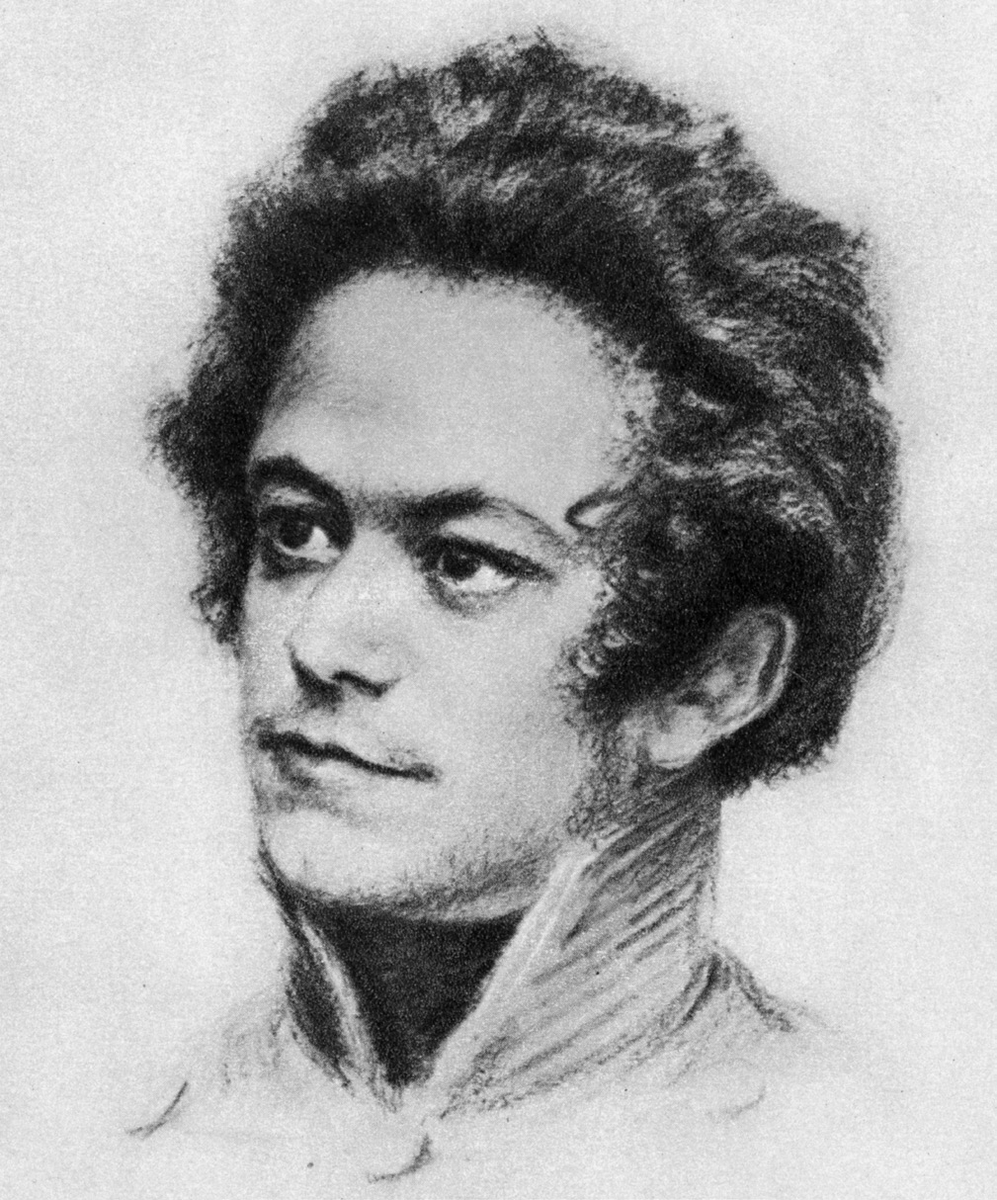
Portrait of young Karl Marx as a student, before he grew the famous beard Portrait of young Karl Marx, public domain -
Part of my surprise was probably just my own historical illiteracy. My knowledge of Marx was "wrote a lot about socialism" and that was basically it. With a name like Karl Marx, and Marxism being strongly associated with the Soviet Union, I was pretty sure he was Russian.
-
I was extremely wrong about both those things; turns out "Marx" is a very German name, and Marx himself was German -- although just barely. He was born in Trier, which until just 3 years before his birth was part of France, until Napoleon fucked up.
-
I am absolutely not going to attempt to dissect Karl Marx's political views or attempt to explain communism or socialism (though if you live in America you should definitely look it up because you're almost certainly wrong about it). I'm going to stick to the guy.
-
Marx's whole family was Jewish; his grandfather was a rabbi. Under French law they faced a lot of discrimination, so in order to work as a lawyer Karl's dad converted to Christianity, something many Jews did at the time, and changed his name from Herschel Levi to Heinrich Marx.
-
Karl Marx was an atheist, and in later life very critical of Judaism the religion. His writing on the subject has been interpreted as Marx being anti-semitic, but in the context of the time, and also being Jewish himself, it's more like an ex-Catholic being pissed at Catholics.
-
We don't know much about Karl as a young child, but his wealthy family afforded private tutors. He attended two different universities but was not a model student: he was known for heavy drinking, getting into fights, and spending all the money his parents sent him immediately.
-
Karl's dad was a big fan of the Enlightenment, the explosion of science and philosophy in the 1600s and 1700s. He read Newton, Leibniz, and Thomas Paine, and passed this respect for systematic learning and progress down to his son, who idolized him for his whole life.
-
Karl's relationship with his mother was much less good. She came from the Netherlands, from a wealthy and conservative Jewish family. Karl's father died when he was 20 years old, and he would spend the rest of his life squabbling with his mother over his inheritance.
-
Karl's dad died when Karl was still in university. Getting his mother to fund his education was a struggle when he was clearly spending so freely. He resented having to depend on his mother for money, but depending on others for money was going to be a constant of his life.
-
Also while only mid-way through university, Karl got engaged to his wife Jenny. This was a definitely a match born from love, because it was deeply frowned upon, partly because of class differences (she was a minor nobility) and partly because Karl didn't have a job yet.
-
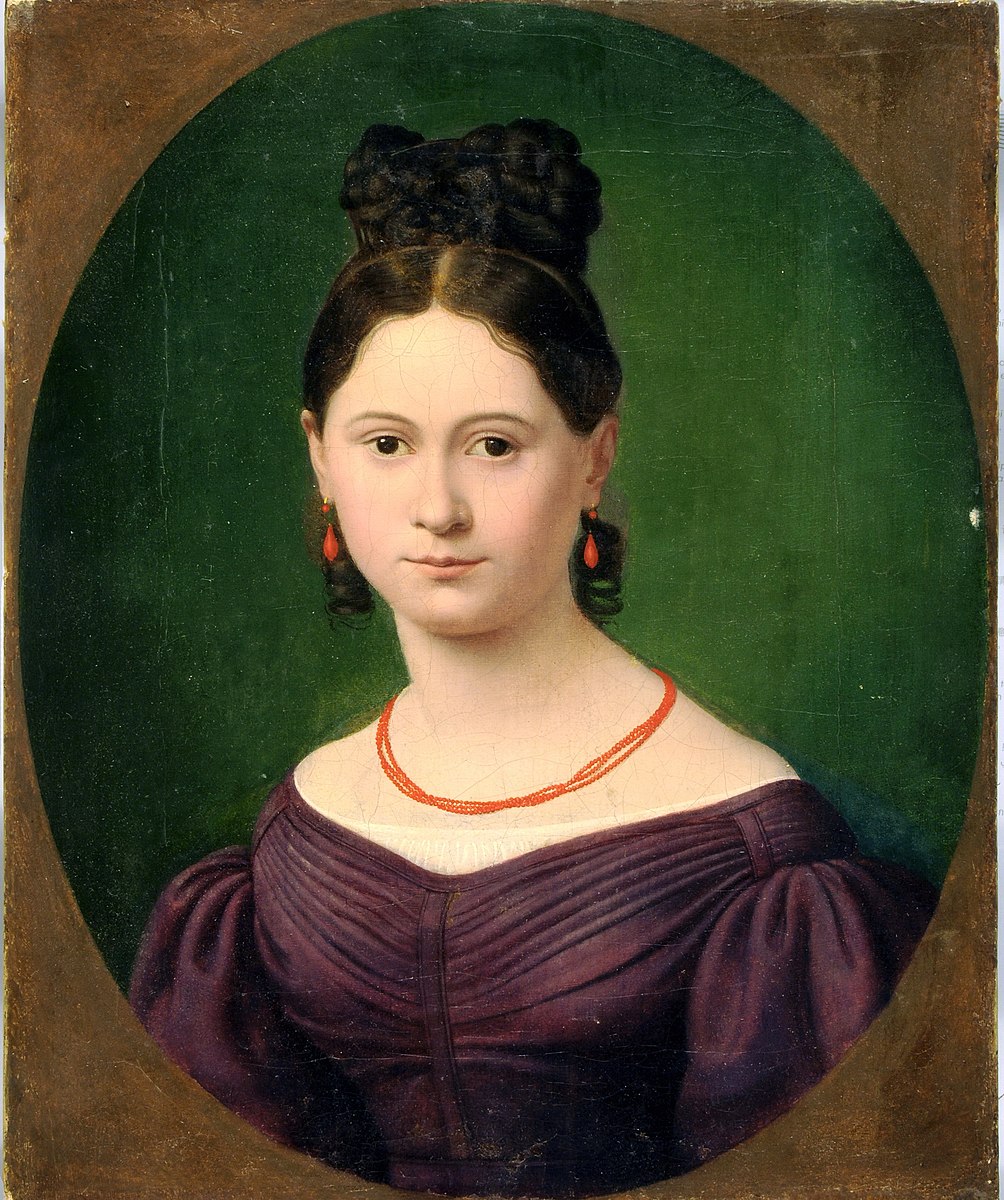
Portrait of Jenny von Westphalen, later Jenny Marx, who married Karl despite class differences and his lack of income Portrait of Jenny von Westphalen, public domain -
Unable to marry his wife because he didn't yet have a steady income was a big problem, and Marx's early twenties were a series of attempts to solve it. His primary income was irregular payments for newspaper articles; what he wanted was a steadier job as a newspaper editor.
-
In order to do this Marx, the literal definition of a communist, did something I would never have expected: he bought shares in a newspaper company, and became heavily involved in marketing his newspaper in an attempt to boost circulation. It was really quite capitalist.
-
This was not considered by Marx and his contemporaries to be a betrayal of his already-forming socialist principles: companies were at that point usually owned by one person, or a family. Having a corporation where many people owned shares was seen as a more democratic option.
-
Another surprise for me: Marx considered himself a democrat. It wasn't until later when democracy gained power that he began to consider the difference between democracy, run by the people, and socialism, owned by the people. At the time they were both just "no more kings".
-
One thing that was *not* a surprise was that Marx engaged in the perennial hobby of leftists everywhere, which is getting into huge fights with other leftists about who is the most left. He spent a great deal of time feuding, slandering and settling scores with various rivals.
-
A great deal of Marx's writing, which is endlessly analyzed and amplified, is extremely contextual, time-specific point-scoring in which he was basically subtweeting recent news articles written by other people, and should probably be taken less seriously.
-
But another surprise was quite how willing to compromise on his leftist principles he was. As a newspaper editor, he (correctly) identified that he could boost circulation by appealing to the large body of more conservative readers in town, and so he did, burying his own views.
-
At 26 Marx met Friedrich Engels, with whom he would form a lifelong friendship and collaboration. In their twenties, both were constantly broke, and Marx borrowed money from his mother as an advance on his inheritance to keep them both afloat; Engels was forever grateful.
-
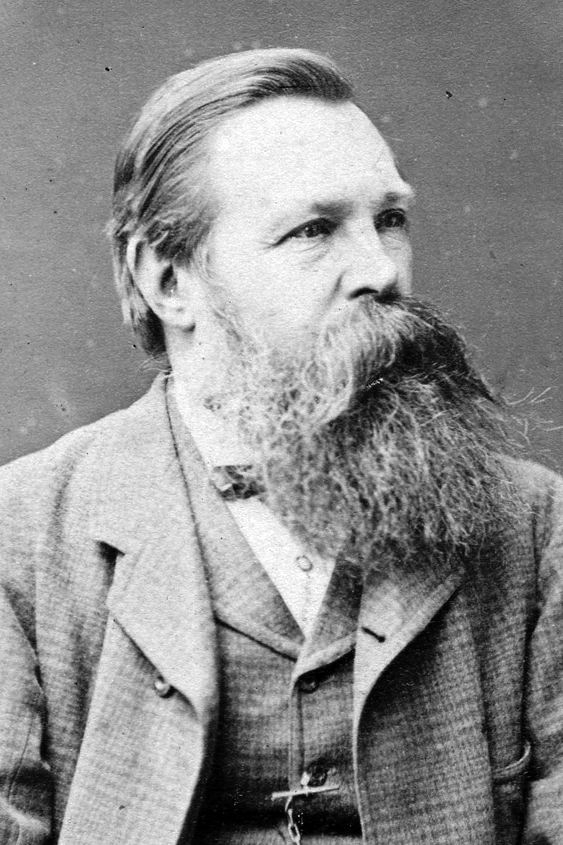
Friedrich Engels, Marx's lifelong collaborator and friend, who co-wrote the Communist Manifesto and financially supported Marx for decades Photograph of Friedrich Engels, public domain -
By this time Marx's political views were beginning to get him in trouble with authorities, in particular the Prussian authorities that ruled Germany. He was deeply resentful of the conservative Prussians, and the animosity was heartily mutual. He left Germany.
-
He began a period of bouncing around Europe: first Paris, then Brussels, then briefly back to Germany, with his wife and an ever-increasing number of children in tow: they would eventually have seven children, 4 of whom died in childhood, which was pretty typical for the time.
-
Marx was cash poor but it was what his biographer describes as "genteel poverty": they didn't have any money, but they did have nice furniture, nice apartments, and servants like a cook and a nanny. It wasn't until things got very bad indeed that he began to dispense with these.
-
He eventually ended up in London, which then as now was the worst place to be if you were trying to save on household expenses. To make ends meet they dismissed servants, moved to progressively worse parts of town, and began to sell their silverware and linens to make ends meet.
-
But just in time for Marx to run completely out of money, Engels came to his rescue. Engels reluctantly abandoned his anti-capitalist principles and went to work in Manchester, running cotton mills that he inherited from his father. Communist it was not; he became very rich.
-
And thus began another long-running contradiction: Marx would spend the rest of his life dependent on handouts from his wealthy friend, who in turn got all of his money by grinding the faces of the poor against the very literal mill-stone. Marx never got a real job again.
-
Funded by cruel, capitalist cash from Engels, Marx became communist enough for both of them, going into full-time writing and activism. He became famous across Europe and also extremely unpopular with governments across Europe; he was under constant surveillance by spies.
-
I was extremely interested to learn that then as now there was a strong intersection between committed socialists and avowed homosexuals; more than one of Marx's intellectual rivals in the London socialist circles were gay, and openly so, though Marx himself was not a fan.
-
Marx in fact was socially very conservative: in addition to being openly homophobic, he had very strong and extremely uptight views about masculinity: men should be strong, in charge, master of their own house. This made his financial dependence on Engels humiliating to him.
-
Marx debated internally for years about whether he did more good through writing and activism or by getting directly involved in fomenting revolution, especially against his hated Prussian foes. Eventually, his failing health made the decision for him, and he stayed in London.
-
Jenny died 2 years before Marx did, of liver cancer. Karl, devoted to her all his life, stayed at her bedside and read the works of Darwin, whose ideas Marx predictably believed provided a justification in nature for the inevitability of socialism.
-
Marx died aged 64 after years of a painful, disfiguring skin ailment. He remained a staunch atheist all the way to his death. He left his family destitute, but Engels continued to support them and when Engels died he left Marx's daughters the equivalent of millions of dollars.
-
There is no point trying to summarize the legacy of Karl Marx in tweets. Whole nations have risen and fallen while calling themselves Marxists, there are huge bodies of literature and philosophy devoted to discussing his ideas specifically. He absolutely changed the world.
-
But what I'm taking away from this is that he was, in person, hardly a fanatic. He was willing and able to compromise his principles to meet reality. His life never came within a thousand miles of matching his rhetoric. He made fun of people calling each other "comrade".
-
In one way you could look upon this as hypocritical, and I certainly did before this, but his peers at the time did not see it that way, and now I don't either. He lived as close to his principles as he could while balancing the demands of reality, health, and family. We all do.
-
There's something to be learned from the fact that Karl Marx, who gave his very name to a specific kind of socialism, was willing to be pragmatic and even incremental in his life, without being considered a fraud. He was, in the end, just some guy, not some avatar of communism.
-
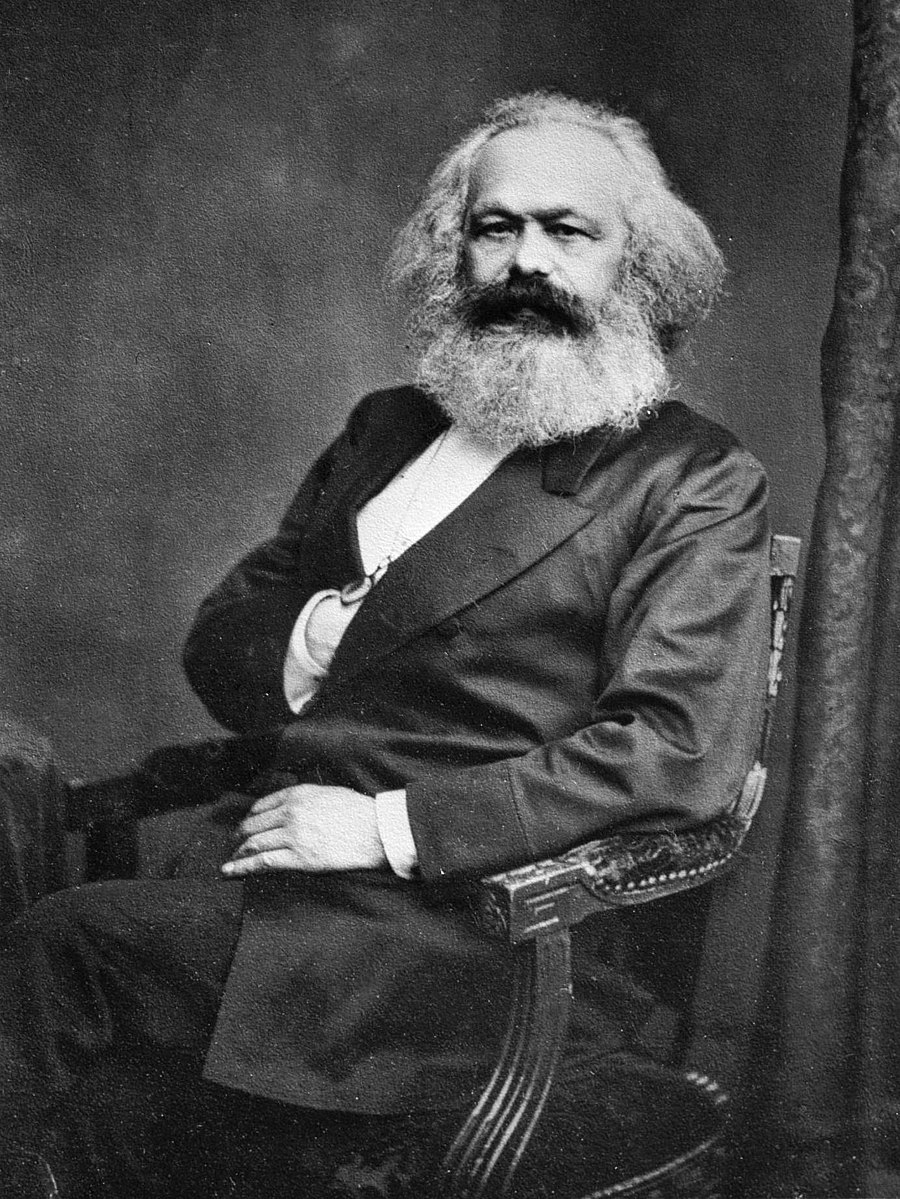
Photograph of Karl Marx in later life, the philosopher whose ideas gave his name to an entire political movement Photograph of Karl Marx, public domain
- Previously: Charlotte Bronte
- Next: Pyotr Ilyich Tchaikovsky
- Full list
Text and images copyright © 2020-2023 Laurie Voss
except where indicated
except where indicated